Walk into any basement, energy closet, or garage and you will likely discover a gray steel door with a latch and a label or more from a past electrical contractor. Behind that door sits the most crucial piece of your home's electrical system: the electrical panel. It is unglamorous, it hardly ever gets a reservation, and it does its job so silently that years can pass without anybody lifting the cover. Yet every light that flips on, every charger, device, heatpump, server rack, and car battery charger depends on that panel doing a thousand small things right.
The electrical panel is both a distribution center and a safety device. It receives electrical service from the energy, divides it into branch circuits, and secures those circuits from overloads and faults. The much better you comprehend what the panel does, the more secure and more resilient your home will be, specifically as loads climb with electrification. I have actually changed scorched buses, rebalanced extremely uneven feeders, and found annoyance trips to loose terminations. Excellent panels avoid the majority of these headaches. Poorly preserved or undersized panels welcome them.
What the Panel Really Does
At its core, the panel takes a high‑capacity feed from the utility and divides it into manageable, safeguarded circuits. In The United States and Canada, that feed normally gets here as split‑phase service, providing 2 hot legs at 120 volts relative to neutral, and 240 volts in between the legs. In much of the remainder of the world, single‑phase 230 volt service is common, and multi‑family buildings may see three‑phase distribution. The panel's bus bars accept the incoming service, and breakers use those buses to feed branch circuits.
Protection matters as much as circulation. When a circuit is overwhelmed or a fault occurs, the breaker opens before conductors get too hot. The main breaker is your last line of defense for the entire house, and it also supplies a manual methods to de‑energize all downstream circuits. Grounding and bonding, frequently misunderstood, take place inside or nearby types of electrical panels to the panel as well. The grounding electrode conductor connects the system to earth. The connection in between the neutral bar and the enclosure, called bonding, is made at one point only, usually the service equipment. In subpanels, neutrals are separated from premises. I discover a lot about the quality of past work by opening a panel and inspecting that single detail.
Think of the panel as a traffic circle where currents get in, branch, and return, with guardrails that spring into action when driving gets erratic. The rules of that circle are set by your local code authority and security requirements, and the panel's job is to impose them in metal and copper.
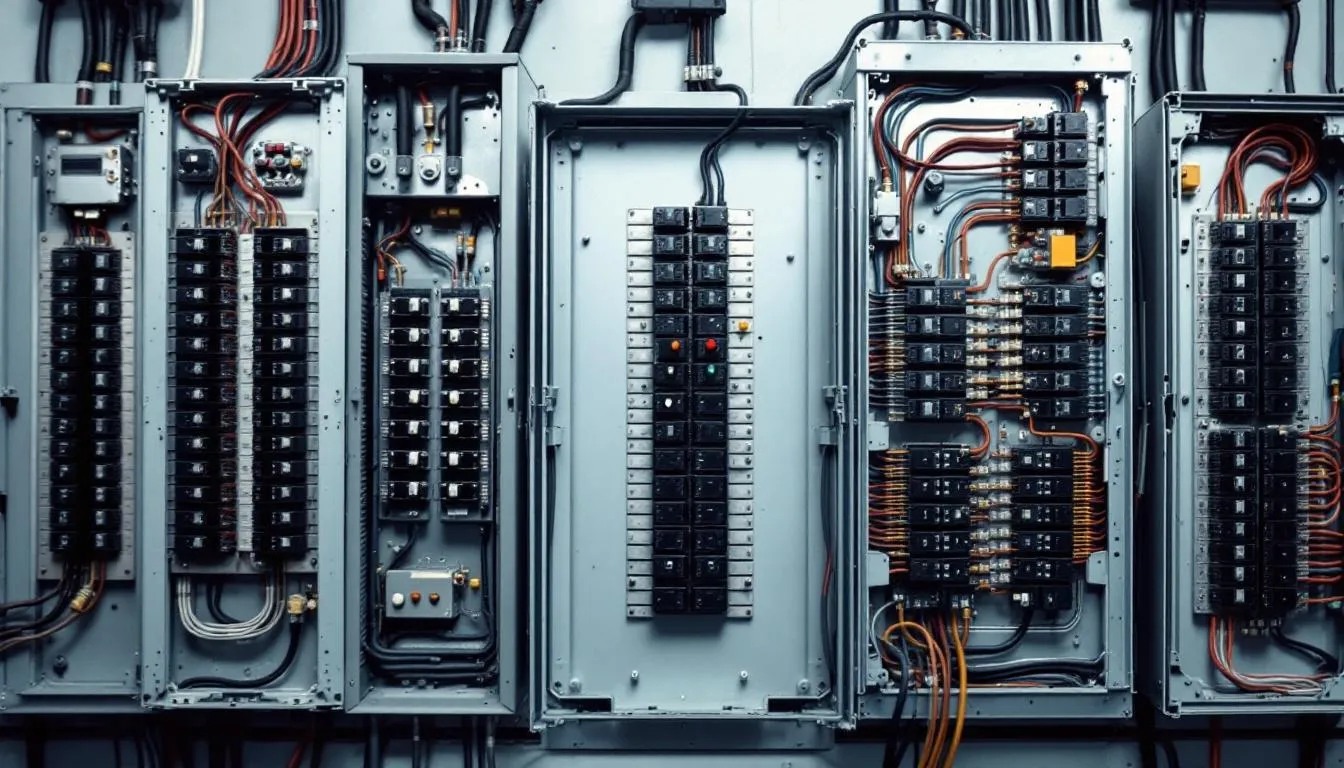
Anatomy of a Modern Panel
Panels look easy from the outdoors, however the parts inside serve distinct functions. Knowing them assists owners speak wisely with electrical experts and area difficulty early.
The enclosure is the metal box protected to a wall stud or masonry. It must have sufficient working clearance, which is where many remodels go wrong. I have seen freezers shoved against panels and shelving set up inches in front, which seems safe till somebody requires access throughout an outage. Code needs clear area in front and around the panel, typically 30 inches large and 36 inches deep, more in some jurisdictions.
Behind the dead front, a set of bus bars feed breaker stabs. The primary breaker, generally at the top, feeds those buses. Some panels use plug‑on neutral systems, which enhance setup of arc‑fault and ground‑fault breakers by providing an incorporated neutral connection. Neutral and ground bars sit along the sides. In a primary circuit box, they are bonded. In subpanels, the neutral must float, and a separate devices grounding bar is bonded to the can.
Breakers can be found in a couple of flavors. Standard thermal‑magnetic breakers secure against overloads and short circuits. GFCI breakers monitor for imbalance between hot and neutral, opening if even a couple of milliamps leakage to ground. AFCI breakers identify signatures of arcing faults, particularly helpful in avoiding fires from damaged cords or staples through conductors. Lots of contemporary codes require mix AFCI in a lot of living spaces, and GFCI where water is present. Some gadgets combine both functions, which simplifies layout but can complicate troubleshooting.
Bus ranking is a quiet specification that matters. A panel might have a 200 amp primary breaker, but if the bus is rated for just 150 amps, the assembly must be treated as 150 amps. The labeling inside the door tells the fact more reliably than a property listing.
Load, Capacity, and Why "Spare Spaces" Are Not the Like Spare Amps
Owners frequently peer at a panel, see empty breaker spaces, and assume they can add anything they like. Space does not guarantee capacity. I as soon as went to a 1960s ranch with a 100 amp panel feeding a home that had actually grown by 900 square feet, a jacuzzi, and a heatpump hot water heater. The panel had spare breaker spaces, yet the main breaker ran hot throughout cold snaps. A load computation informed the real story.
Load estimations take into consideration square footage, variety of small device circuits, laundry circuits, repaired appliances, A/C, and demand aspects that acknowledge not everything runs at once. The calculation, mandated by code, yields a service size that supports your most likely peak need. Where things get intriguing is with EV charging and all‑electric cooking and heating. A 40 to 60 amp EV battery charger plus an induction range and heat pump can press a 100 amp service to its limitations. If you routinely blow the main when the clothes dryer and oven keep up the battery charger active, you are seeing the mathematics in action.
Oversizing a panel seldom harms. A 200 amp panel with a bus to match offers headroom for future loads and prevents daisy‑chained subpanels that make troubleshooting untidy. In larger homes or homes with accessory dwellings, 320/400 amp services with meter‑main combinations are increasingly typical, allowing two 200 amp panels or one main with a big subpanel. The utility connection, service conductors, and grounding must all scale accordingly.
Safety: The Uninteresting Details That Prevent Fires
Most panel issues are not significant. They are slow, cumulative problems that eventually end up being dramatic. Loose terminations might carry for several years, warming up a lug just enough to oxidize the copper, which increases resistance and heat, till one day you smell what I explain to clients as the "warm electronic devices" odor near the panel. Corrosion in coastal environments gnaws at breakers and bars. Aluminum feeders require antioxidant paste and correct torque, both quickly skipped by an untrained installer.
Torque matters. Makers specify inch‑pound values for lugs and breakers. Electricians who carry a torque screwdriver tend to produce panels that age gracefully. Pulling on a conductor with pliers is not torqueing. On an evaluation, I try to find clean conductor stripping without any nicked hairs, neatly dressed wires, and clear labeling. I likewise try to find hacks: double‑lugged neutrals under a single screw, grounds and neutrals mixed on the incorrect bars in subpanels, and tandems where they do not belong. Numerous panels enable "tandem" breakers just in particular slots, and just approximately a count noted on the label.
Arc fault security is a regular point of friction due to the fact that AFCI breakers can journey on specific loads, especially older vacuum motors and some cheap LED drivers. I have actually swapped brands to decrease nuisance tripping and rerouted neutrals when shared neutrals caused parallel courses. If an AFCI trips often, treat it as a diagnostic clue instead of junk to be removed. Many tripping issues trace back to circuitry mistakes in the circuit, not the breaker itself.
Ground fault defense conserves lives, particularly outdoors and in bathrooms and kitchen areas. Today's codes often need GFCI protection for outside outlets, garages, basements, laundry areas, and kitchens. Whether you put that defense at the breaker or the receptacle depends upon the circuit design, but the electrical panel remains a convenient and trusted location to centralize it.
Main Panels, Subpanels, and When Each Makes Sense
The primary circuit box contains the service disconnect, the very first way of shutoff. Whatever downstream is circulation. A subpanel is just a panel fed by a breaker in the primary panel, with four‑wire feeders: two hots, a neutral, and a ground. Neutrals and premises are separated in subpanels, an outright guideline that prevents objectionable present on metal enclosures.
Subpanels make good sense for big additions, detached garages, yard offices, or anywhere you would otherwise run numerous long branch circuits. Instead, you run a single properly sized feeder and install a subpanel near the loads. It reduces voltage drop on long terms and improves future flexibility. I choose to oversize subpanel feeders somewhat when trenching is involved, since digging once again for a larger cable television is seldom worth the cost savings of going small.
Detached structures include another layer: grounding electrodes at the structure, in some cases with extra bonding requirements. Regional changes vary. If a client asks me to "simply run a number of breakers out to the store," I understand we need a much better strategy. It pays to get the subpanel right the first time, with room for dust collection, air compressors, and welders if the store evolves.
Upgrades: When and How to Take on Them
Reasons to update panels cluster in three classifications: capability, security, and modernization. Capability upgrades include EVs, heatpump, induction cooking, hot tubs, and accessory residence units. Security upgrades address panels with known flaws, such as particular vintage models whose breakers do not reliably trip or whose bus designs trigger getting too hot. Modernization includes outdoor disconnects, whole‑home rise defense, and smart monitoring.
Upgrading from 100 to 200 amps generally includes coordination with the energy, replacement of meter bases, service masts, and the grounding system. Expect to be without power for several hours to a day. I tell clients to clear the ice maker, strategy meals that do not need cooking that day, and keep delicate electronics unplugged until after rise devices are set up and power is stable. Expenses differ by region and complexity, however a clean upgrade without any surprises often falls in the low 4 figures, increasing when drywall repair work, long service entrances, or trenching come into play.
One underrated modernization is the addition of a main breaker lockout and a systematic directory. A well‑labeled electrical panel is a gift to future you. I have spent too many hours tracing unlabeled circuits in homes with detailed remodel histories. A simple load directory site that is precise today is worth more than the majority of smart home gadgets.
Surge Protection and Delicate Electronics
Ask ten electrical contractors about surge security and you will get a dozen viewpoints. Energy disruptions, lightning, and large motors switching on and off produce surges that can stress electronic devices. Whole‑home rise protective gadgets (SPDs) mounted at the panel lower the severity of inbound spikes. They are not invincibility cloaks. They work best as part of a layered method with quality point‑of‑use defense for delicate devices. I have actually seen SPDs compromise themselves beautifully throughout a storm, taking the hit and leaving tvs, a/c boards, and routers undamaged. For the cost of a midrange appliance, installing a Type 2 SPD at the electrical panel is reasonable insurance.
The other half of the equation is voltage stability. Long rural feeds, overloaded neighborhood transformers, or undersized conductors can cause sags and swells. If you often discover lights dim when a compressor begins, it deserves investigating conductor size and energy transformer capability, not just slapping in larger breakers. The panel is a perspective for those diagnostics, since adding a clamp meter and a data logger at the primary provides a picture of voltage and existing behavior over time.
Energy Displays and Smarter Panels
Over the previous couple of years, energy displays that clip over mains and branch circuits have actually moved from enthusiast toys to trusted diagnostics. They reveal patterns that eyeballing a costs can not, such as over night vampire loads or a well pump running too often. I installed a screen in an older home after the owner complained of high winter bills even after switching to a heatpump. Data revealed the resistance heat strips engaging for long stretches due to the fact that of a misconfigured thermostat. The electrical panel, once again, was the main node that made the insight possible.
Smarter panels incorporate monitoring, load shedding, and even circuit‑level control. For homes with limited service size, load management can shut off an EV battery charger while the oven is on, then resume charging later on. That approach can delay or prevent costly service upgrades. When I design panels for clients preparing for electrification, I leave space for these controllers or define equipment with growth capability.
The Peaceful Art of Circuit Layout
A well‑designed panel is tidy, however neatness serves more than visual appeals. Strategic layout decreases neutral crowding, keeps AFCI and GFCI pigtails manageable, and prevents cross‑talk in shared channels. I position high‑draw 240 volt breakers near the leading to keep those conductors brief and far from low‑level control electrical wiring. Multi‑wire branch circuits, if utilized, require manage ties or two‑pole breakers so both legs trip together. That is not just code, it prevails sense for security when a shared neutral is present.
Phasing matters with split‑phase service. Stabilizing loads throughout the two legs reduces neutral currents and voltage imbalance. In one townhouse, half the lighting flickered when the hair clothes dryer and microwave ran together. The cause was an unbalanced panel that put most lighting on one leg with a number of huge loads on the other. Shifting a couple of breakers removed the problem. The property owner thought we had replaced a transformer. We merely made the panel do its task intelligently.
Aging Panels and Known Issue Children
Not all panels age gracefully. Particular brand names and designs have well‑documented issues. I have actually removed panels whose breakers failed to trip under fault conditions, as verified by independent testing over many years. Others struggle with bus stab styles that loosen up and arc. While it is not my role here to name and shame, a certified electrical expert in your location will understand which panels merit replacement on sight and can reveal you the failure modes. If a home examination flags an out-of-date or troublesome electrical panel, do not treat it as a small bargaining chip. Treat it as a priority repair.
Age shows up in subtler methods. Breakable insulation, cloth‑covered conductors, and missing out on bushings tell me the panel has seen decades of heat and dust. I look for rust lines at the bottom of the can, a free gift of past water intrusion through a bad service mast flashing. Water and electrical energy mix poorly, and deterioration at the primary lugs can heat up under load. Replacement is often less expensive than chasing intermittent problems that wore away parts create.
EVs, Heat Pumps, and the Increase of the Hectic Panel
Electrification shifts more energy into your panel. A decade back, a common suburban home may have a 100 amp panel with gas heat and cooking, a modest air conditioning condenser, and a few counter top appliances. Now, a typical upgrade path includes a 40 amp EV circuit, a 30 amp heat pump hot water heater, a 40 to 50 amp induction variety, and a bigger heatpump air handler with backup heat strips that can draw 10 to 15 kilowatts. The electrical panel ends up being a busier intersection.
Before piling on circuits, step back for an energy strategy. A 200 amp panel, mix AFCI/GFCI where required, a whole‑home SPD, and space for a load management controller is a robust standard for a modern home. Where service upgrades are challenging, vibrant load management buys time. I have set up systems to cap total house existing at a limit, immediately throttling cars and truck charging when the dryer and variety run. Owners keep their way of life, and the lights stop dimming.
For multifamily settings, panels connect with building load centers, common‑area feeders, and need charges from the utility. A well‑instrumented main with subpanel‑level information helps residential or commercial property managers prevent expensive peak spikes. Once again, the panel is not just a box of breakers. It is where decisions about capacity, control, and strength converge.
Working Around Panels: Access, Labeling, and Regular Care
Most homeowners communicate with an electrical panel throughout 2 moments: when a breaker journeys and throughout a restoration. Those are not perfect times to discover the basics. A little attention once a year can avoid emergencies.
Here is a brief, practical list that appreciates what house owners can safely do while leaving stimulated work to licensed professionals:
- Keep the location in front of the electrical panel clear, roughly 30 inches wide and 36 inches deep, with the panel centerline between about 4 and 6 feet off the floor. Open the door and read the directory site. Update labels to match reality. Utilize a permanent marker and plain language, not "bed room?" or "spare." Press the test buttons on GFCI and AFCI breakers two times a year. Reset them to ensure the mechanisms move freely. Scan for signs of trouble: a warm or buzzing breaker, blister marks, rust, or an odor of hot plastic. If you notice any, stop and call an electrician. If you plan to include a high‑draw appliance, request for a load calculation and an evaluation of your panel's bus ranking and available areas before buying the appliance.
Electricians carrying out maintenance will go further. We remove the dead front, check torque on terminations, try to find double taps, validate bonding in the right locations, and perform thermal scans under load when necessitated. Some flaws just appear at high demand, so scheduling a check during peak usage seasons is useful.
Permits, Assessments, and Doing It Right the Very First Time
Panels live at the intersection of codes and real‑world conditions. Permits and evaluations might feel governmental, however a 2nd set of eyes captures errors. I welcome great inspectors. They have actually seen patterns across hundreds of jobs and often conserve time by guiding a detail before it ends up being a correction. Pulling a license files that your upgrade fulfills existing security standards, which matters for future insurance claims and resale.
In older areas, I have actually found meter bases with mismatched sockets, split‑bus panels with add‑on disconnects mounted awkwardly, and 3 generations of handyman repairs layered inside the can. The fix is not tinkering. The fix is a fresh start, with appropriate service equipment, clear grounding and bonding, and a directory site that leaves no doubts. Faster ways in service devices have a method of ending up being expensive later.
Practical Circumstances and Lessons from the Field
A midcentury home with a 100 amp panel and no readily available breaker areas needed a level 2 EV battery charger. The house owner asked for a "skinny breaker" to make space. The estimation showed the service already running near its limit on cold evenings when resistance strips started. We provided 2 choices: a 200 amp service upgrade or a load management system paired with a 50 amp capable battery charger called back to 24 amps. The owner chose load management, and we reserved panel area to ease a future upgrade. 2 years later, after including an induction variety, they went with the 200 amp upgrade. Because we had actually prepared ahead, the task required very little rewiring.
In another case, a lakefront cabin had problem GFCI trips on a fridge circuit in the garage. The panel directory identified it "garage." After tracing the circuitry, we discovered a mix of receptacles and an outside outlet downstream from the refrigerator. The repair appertained division: a dedicated circuit for the fridge and GFCI defense put to cover the outside loads without consisting of the refrigerator. The electrical panel helped with both the diagnosis and the tidy remedy.
A 3rd example involved flicker and intermittent breaker trips in a new addition. Thermal imaging at the panel revealed a hot neutral bar. The root cause was a connected neutral in a junction box where a multi‑wire branch circuit had been extended without a two‑pole breaker. One switched breaker and fixed neutral separation later on, the symptoms vanished. The panel informed the story if you listened.
Planning for the Next Decade
Homes are trending towards higher electrical reliance. Battery storage and solar further incorporate with the electrical panel, utilizing either supply‑side taps or breakers with specific interconnections. Automatic transfer switches for generators or inverter‑based backup systems require careful coordination with the panel's bus ranking and main disconnect. Labels and placards become important so that very first responders and future specialists comprehend the system at a glance.
If you are remodeling or constructing, create the electrical panel as part of the architecture. Position it where access is long-term, moisture danger is low, and future growth is possible. Request at least 20 percent spare areas after current requirements. Include a whole‑home SPD from the start. Define breakers with the defense types needed by your jurisdiction, not just generic units. And record the as‑built circuit map with photos before drywall closes.
What a Good Panel Feels Like
Open a well‑executed electrical panel and you see straight runs, clear labels, neatly landed conductors, and breakers matched to their loads. You feel no warmth on the cover under basic load. You hear nothing however quiet. The directory site is specific: "Dishwasher," not "kitchen left." The main bonding jumper exists in the service equipment, missing in the subpanel. GFCI and AFCI security appear where they should. The bus ranking matches the primary. Rise security sits on a devoted breaker or lugs with brief leads. There is room to grow.
A panel like that signals respect for the house and its occupants. It is more than compliance. It is stewardship.
The Bottom Line
The electrical panel is the backbone of a home's electrical system, the point where security, capacity, and convenience fulfill. It channels power, limits threats, and adapts as your life and innovation modification. When you invest in a quality panel, sized and set up with thought, you get less surprises and more choices. If you treat it as the energy it is, keep it available, identified, and preserved, it will keep doing quiet, necessary work for decades. And when the day concerns include that next big load, you will have a clean, capable foundation rather of a puzzle box.